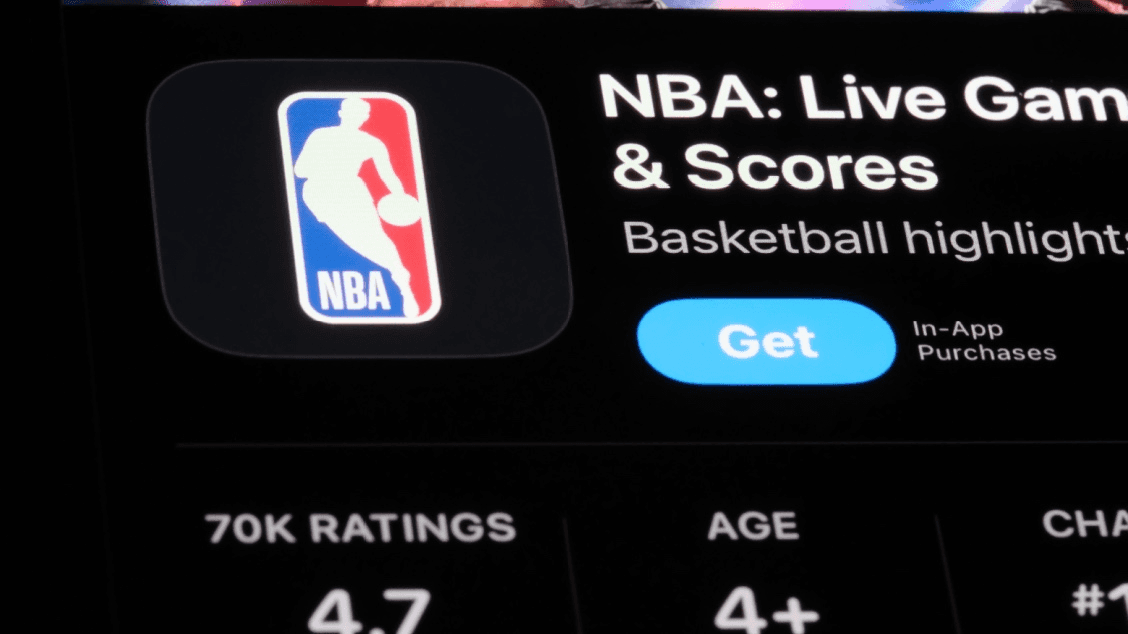
National Basketball
Association (NBA)

Services

Research, Design, Systems, User Testing

Team

Design Research, Product Management, Engineering, Analytics

Services

Research, Design, Systems, User Testing

Timeline

2021-2026

During my time as Director of Product Design at the NBA, I began by helping lead product design for the official NBA App (iOS, Android, connected devices, emerging platforms) and managed a team of 3 designers across mobile, design systems, and connected devices (tvOS, Roku, Apple Vision Pro). Users in 200+ markets, with over 1B fans globally.

The reimagined app drove:

+43%

YoY growth in NBA Subscribers

+42%

YoY increase in downloads across iOs

4.7

Star rating on App Store (from 2.2)

How to fix a fragmented and broken experience

The fans were losing trust in the NBA.

A legend in sports were losing viewership to the NBA had outsourced design work for years. The result: the app looked like it was built by different teams (because it was). iOS looked different from Android. Web didn't match either. Interactions were inconsistent. User flows contradicted each other. A fan could have three completely different experiences depending on which device they used.

Logo 4
Logo 5
Logo 3
Logo 2
Logo 6
Logo 1

Why This Mattered

  • User Trust: Consistency signals quality. Inconsistency signals chaos. Fans didn't know if the app was reliable.

  • Support Burden: Design inconsistency creates confusion. Support tickets spike when users see different UI on different devices.

  • Scaling Pain: Every new platform (tvOS, Vision Pro, web) meant rebuilding from scratch. No shared language, no shared components, no velocity.

  • Team Fragmentation: Design was distributed across contractors and agencies. No single person owned quality. No culture. No continuity.

Strategy: build a system and a team to operate it

We had good designers, but no reliable system; no shared language. No place for consistency to live.

  1. Build a design system in Figma: this is what we named Kinetic: a shared foundation that would become the single source of truth for every platform

  2. Build a team that owns consistency in 1 or more platforms - designers who care about systems, not just individual features

  3. Sequence the work by fixing iOS first (flagship), then Android (parity), then tvOS (new context), then Vision Pro (new paradigm)

Mobile: iOS + Android

Why it fixed the problem: iOS redesign established the new design language — what consistency looks like when designed thoughtfully. Android wasn't a copy. It was a thoughtful adaptation of the same language to Android conventions. For the first time, iOS and Android felt like the same app.

Result: iOS established direction. Android launched with [X%] feature parity and [Y rating]. Both platforms hit [X million] users.

[IMG: Side-by-side of iOS and Android showing how same component adapts to platform conventions — button style, navigation, color application]

They wanted trust
quis nostrud exercitation ullamco laboris nisi ut aliquip ex ea commodo consequat. Maecenas malesuada. Praesent congue erat at massa.

Quick moments to digest
quis nostrud exercitation ullamco laboris nisi ut aliquip ex ea commodo consequat. Maecenas malesuada. Praesent congue erat at massa. Lorem ipsum dolor sit amet, consectetur adipiscing elit. Phasellus accumsan cursus velit. Vestibulum ante ipsum

Quick moments to digest
quis nostrud exercitation ullamco laboris nisi ut aliquip ex ea commodo consequat. Maecenas malesuada. Praesent congue erat at massa. Lorem ipsum dolor sit amet, consectetur adipiscing elit. Phasellus accumsan cursus velit. Vestibulum ante ipsum

Caption for the image above will go here and be a nice little visual anchor point

Caption for the image above will go here and be a nice little visual anchor point

How We Fixed It

Kinetic Design System (Months 1–6)

We built a unified component library, design tokens, and interaction patterns for iOS, Android, tvOS, and web.

Why it fixed the problem: Before Kinetic, every platform reinvented the button, the card, the navigation. After Kinetic, there's one button. One card. One language. Consistency solved at the source.

Strategy: build a system and a team to operate it

We had good designers, but no reliable system; no shared language. No place for consistency to live.


  1. Build a design system in Figma: this is what we named Kinetic: a shared foundation that would become the single source of truth for every platform

  2. Build a team that owns consistency in 1 or more platforms - designers who care about systems, not just individual features

  3. Sequence the work by fixing iOS first (flagship), then Android (parity), then tvOS (new context), then Vision Pro (new paradigm)

Strategy: build a system and a team to operate it

We had good designers, but no reliable system; no shared language. No place for consistency to live.


  1. Build a design system in Figma: this is what we named Kinetic: a shared foundation that would become the single source of truth for every platform

  2. Build a team that owns consistency in 1 or more platforms - designers who care about systems, not just individual features

  3. Sequence the work by fixing iOS first (flagship), then Android (parity), then tvOS (new context), then Vision Pro (new paradigm)

Have me be a cool animation in “Don’t try to be original. Just try to be good.” - Paul Rand. Also, my professor used to say "Never give the client options, they'll always pick the wrong one". I

First Last

Contact
& Next Steps

Interested in exploring design leadership roles? Let's talk.

hello@abeerkhalique.com

Contact
& Next Steps

Interested in exploring design leadership roles? Let's talk.

hello@abeerkhalique.com

Contact
& Next Steps

Interested in exploring design leadership roles? Let's talk.

hello@abeerkhalique.com